Build Smarter Business Plans with LivePlan
LivePlan simplifies business planning with AI guidance, forecasting tools, over 550 sample plans, and more.


From Stravinsky to Donna Summer, the story of connections that enriched music – in both directions
One of many things I did not expect to learn in this book is that the BBC benefited from Nazi technology. Its standard tape recorder, in use till the 1970s, was called the BTR-2: EMI’s original model, the BTR-1, had been copied from a captured example of the German “magnetophon”, as used by Hitler to record a radio broadcast.
Musicians who liked fiddling with machines, too, benefited from this legacy. Delia Derbyshire, the BBC Radiophonic Workshop pioneer who produced the original Doctor Who theme tune and otherwise particularly enjoyed playing an enamel green lampshade, influenced Paul McCartney’s experiments with tape loops, while Steve Reich hit upon his compositional technique of “phasing” phrases in and out of sync with one another on tape recorders, before training live musicians to do the same.
 Mưa to kéo dài từ đêm qua đến sáng nay 26-8 khiến nhiều tuyến phố và khu dân cư ở Hà Nội ngập sâu, phương tiện di chuyển khó khăn, giao thông ách tắc.
 Hàng loạt xe máy nằm la liệt trước các cửa hàng sửa xe để khắc phục vì chết máy, khi Hà Nội mưa lớn kéo dài sáng 25/8.
The Argentinian writer maps a journey through fear, healing and the terrifying permeability of our boundaries
Horror, in essence, is about porousness. Our terrors take varied forms but horror probes their single, existential source: the terrifying permeability of our boundaries. If spirits can swim back from the world of the dead, if the living body can degrade to the point where it becomes malleable or parasitically possessed, what hope can there be for our fantasy of security and selfhood?
Argentinian writer Samanta Schweblin’s most recent collection of stories, her third in English, may not be categorisable as “horror” in the traditional sense, but it shares with the genre its spiritual core. In Schweblin’s vision, the barriers that separate one thing from another – the wanted from the unwanted, the environmental from the bodily, the unthreatening from the violent and chaotic – are so porous as to be nonexistent. True horror, she reminds us, is neither otherworldly or supernatural, it is simply the acknowledgment of life’s fundamental conditions.
 Mất lái trên mặt đường ướt, chiếc bán tải đâm vào dải phân cách, nảy lên và lộn vòng, đập trúng ít nhất 2 ôtô ngược chiều.
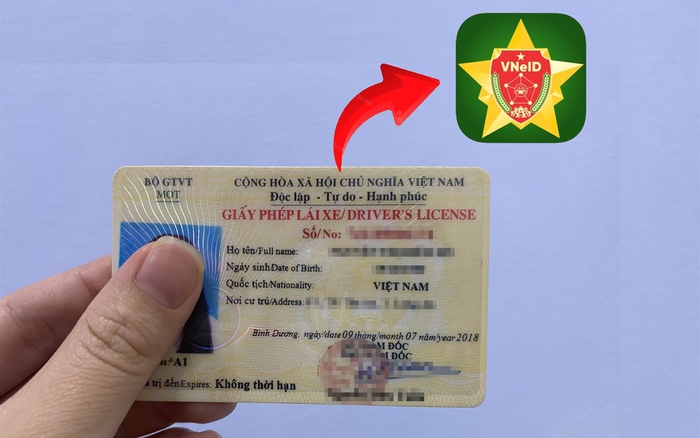 Thêm một cách cập nhật giấy phép lái xe (GPLX) trên VNeID vừa được chia sẻ, hứa hẹn sẽ giúp người dân thuận tiện hơn trong quá trình sử dụng ứng dụng.